 (+035) 527-1710-70
 NEWSLETTER
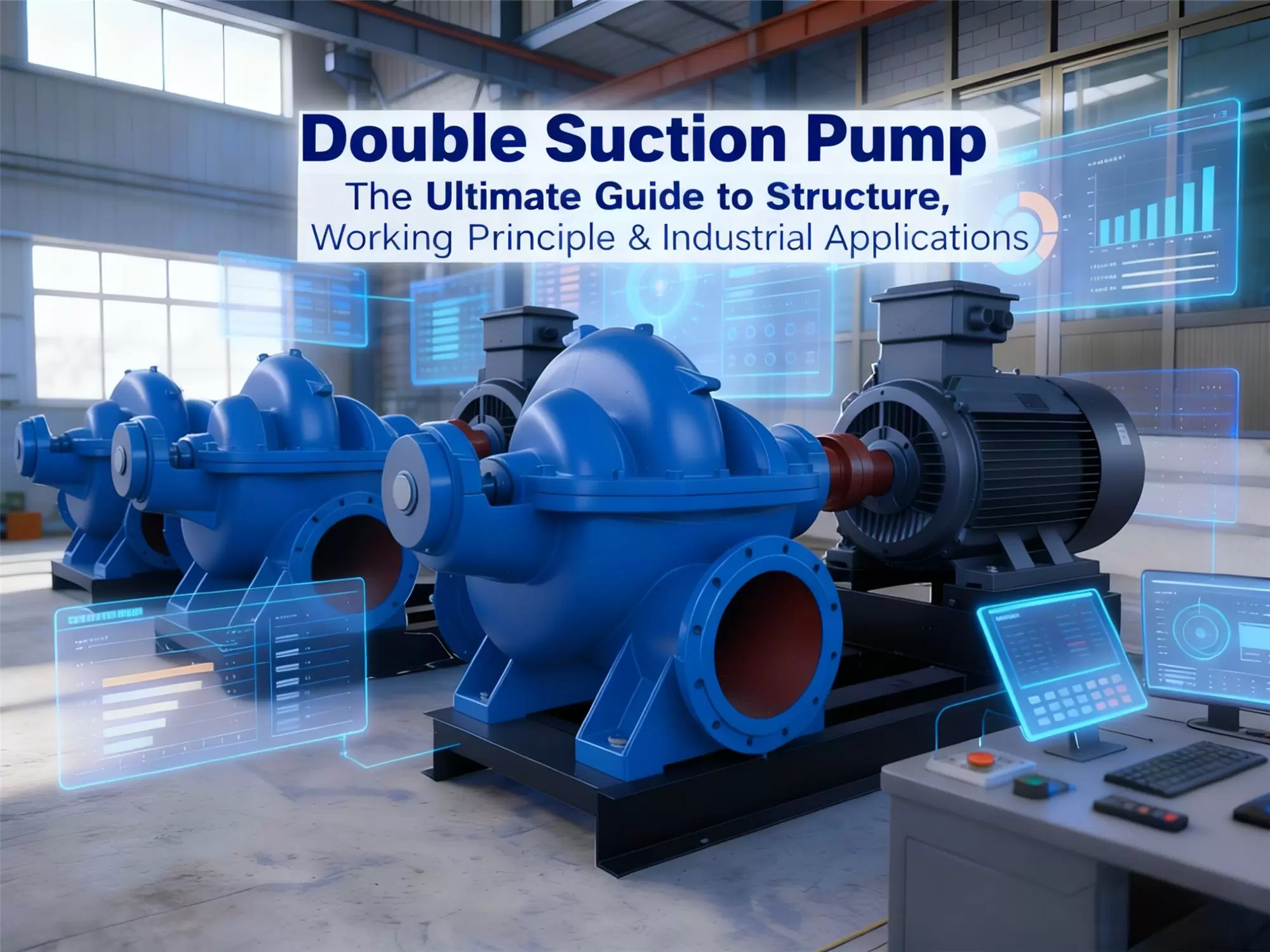
If you’re involved in engineering projects that require high flow rates and strong head pressure—whether it’s municipal water supply, industrial fluid transfer, or large-scale irrigation—you’ve likely encountered the double suction pump. As a critical type of centrifugal pump, it stands out for its exceptional performance and reliability. In this comprehensive guide, we’ll break down everything you need to know: from its unique structure to how it works, key advantages, and real-world applications.
Key Structural Features: What Makes It Unique?
The double suction pump’s performance starts with its innovative design—every component is engineered to maximize efficiency and ease of use.
1. Impeller: Dual-Working Core for Doubled Flow
At the heart of the pump lies a double-sided impeller (two back-to-back single-suction impellers integrated as one). When the pump operates, water from both sides of the impeller flows into a single volute. This design is equivalent to two identical single-suction impellers working simultaneously, doubling the flow rate without increasing the impeller’s outer diameter.
What’s more, the symmetrical impeller design perfectly balances axial thrust. Unlike single-suction pumps that suffer from unbalanced forces (leading to vibration), this symmetry ensures smoother operation and less wear on bearings.
2. Pump Casing: Split Design for Easy Maintenance
The pump casing adopts a horizontal split structure—a game-changer for maintenance. Unlike traditional pumps that require disassembling pipelines or motors to access internal parts, you can simply open the split casing to inspect, repair, or replace components. This cuts down maintenance time, reduces operational downtime, and lowers overall maintenance costs—critical for industrial settings where efficiency matters.
3. Inlet & Outlet: Compact Layout for Easy Installation
Both the inlet and outlet are oriented in the same direction, perpendicular to the pump shaft. This thoughtful design simplifies pipeline layout and pump installation, allowing for a more compact and rational system configuration. Whether you’re integrating it into an existing setup or designing a new system, this feature saves space and installation effort.
How Does a Double Suction Pump Work?
The working principle is based on centrifugal force, but with a twist that amplifies flow capacity:
- Priming & Startup: Before operation, the pump’s impeller chamber is pre-filled with liquid (to avoid dry running). When the motor drives the pump shaft, the double-sided impeller spins at high speed.
- Suction Process: As the impeller rotates, centrifugal force pushes liquid radially outward from the center to the edges. This creates a low-pressure zone at the impeller’s center, drawing liquid into the pump through two inlets simultaneously—a key difference from single-suction pumps that only draw from one side.
- Energy Conversion: The liquid is accelerated by the impeller’s blades, gaining kinetic energy. As it flows into the volute (the pump’s spiral casing), the volute’s gradually expanding flow path slows the liquid down. This converts kinetic energy into static pressure energy, building up the head pressure needed to push the liquid through the discharge pipe.
Core Advantages: Why Choose a Double Suction Pump?
Its design and working principle translate to unmatched benefits for industrial and municipal applications:
1. High Flow Rate & Strong Head Pressure
Engineered to handle large volumes of liquid (high flow) and overcome resistance in long pipelines (high head), it’s ideal for scenarios like water treatment plants, industrial fluid transfer, and large-scale irrigation—where standard pumps fall short.
2. Stable & Durable Operation
The symmetrical impeller balances axial thrust, minimizing vibration and wear on critical components (bearings, seals). This not only extends the pump’s service life but also reduces failure rates, lowering replacement and maintenance costs over time.
3. Excellent Cavitation Resistance
Cavitation (the formation of vapor bubbles in the pump) can damage impellers and reduce efficiency. Unlike single-suction impellers, double-sided impellers reduce inlet flow velocity at the same speed and flow rate—significantly reducing cavitation risk. This makes the pump more reliable, even in low-net-positive-suction-head (NPSH) conditions.
4. Wide Performance Range
With original and modified impellers (including trimmed versions), double suction pumps offer a broad performance spectrum. You can find a model tailored to almost any flow-head operating point—providing flexibility for diverse project requirements. Whether you need to adjust flow rates for seasonal changes (e.g., irrigation) or adapt to different fluid viscosities (e.g., chemical processing), it’s a versatile solution.
Practical Applications: Where Is It Used?
Thanks to its high performance and reliability, the double suction pump is a staple in multiple industries:
1. Water Supply & Sewage Treatment
- Municipal water supply: Delivers clean water to residential areas, commercial buildings, and industrial facilities.
- Sewage treatment plants: Transfers raw sewage, treated effluent, or sludge—handling large flow rates efficiently.
2. Agricultural Irrigation
Ideal for large-scale farms, irrigation districts, or greenhouse complexes. It can deliver sufficient water to cover vast agricultural areas, improving irrigation efficiency and crop yields.
3. HVAC Systems
Used in heating, ventilation, and air conditioning systems for commercial buildings, shopping malls, and industrial plants. It circulates hot or cold water to maintain stable indoor temperatures—ensuring comfort while handling the system’s flow demands.
4. Power Generation
In thermal power plants, nuclear power plants, and hydropower stations, it transports circulating cooling water to generators, turbines, and other equipment. Stable cooling water flow is critical to preventing overheating and ensuring continuous power generation.
5. Industrial Production
- Paper industry: Transfers pulp, process water, or chemical additives.
- Food processing: Moves edible oils, juices, or cleaning fluids (with food-grade materials).
- Chemical industry: Handles corrosive or viscous fluids (with specialized material casings and impellers).
Final Thoughts
The double suction pump is more than just a centrifugal pump—it’s a reliable, efficient solution for high-demand fluid transfer. Its symmetrical design, easy maintenance, and wide performance range make it indispensable in municipal engineering, agriculture, power generation, and industrial settings.
If you’re selecting a pump for your next project, consider the double suction pump if you need:
- High flow rates combined with strong head pressure
- Low maintenance and long service life
- Resistance to cavitation and stable operation
Have questions about choosing the right double suction pump for your application? Or want to share your experience using one? Feel free to leave a comment below!